Your content goes here. Edit or remove this text inline or in the module Content settings
Make Moodle Work With Your Existing Systems
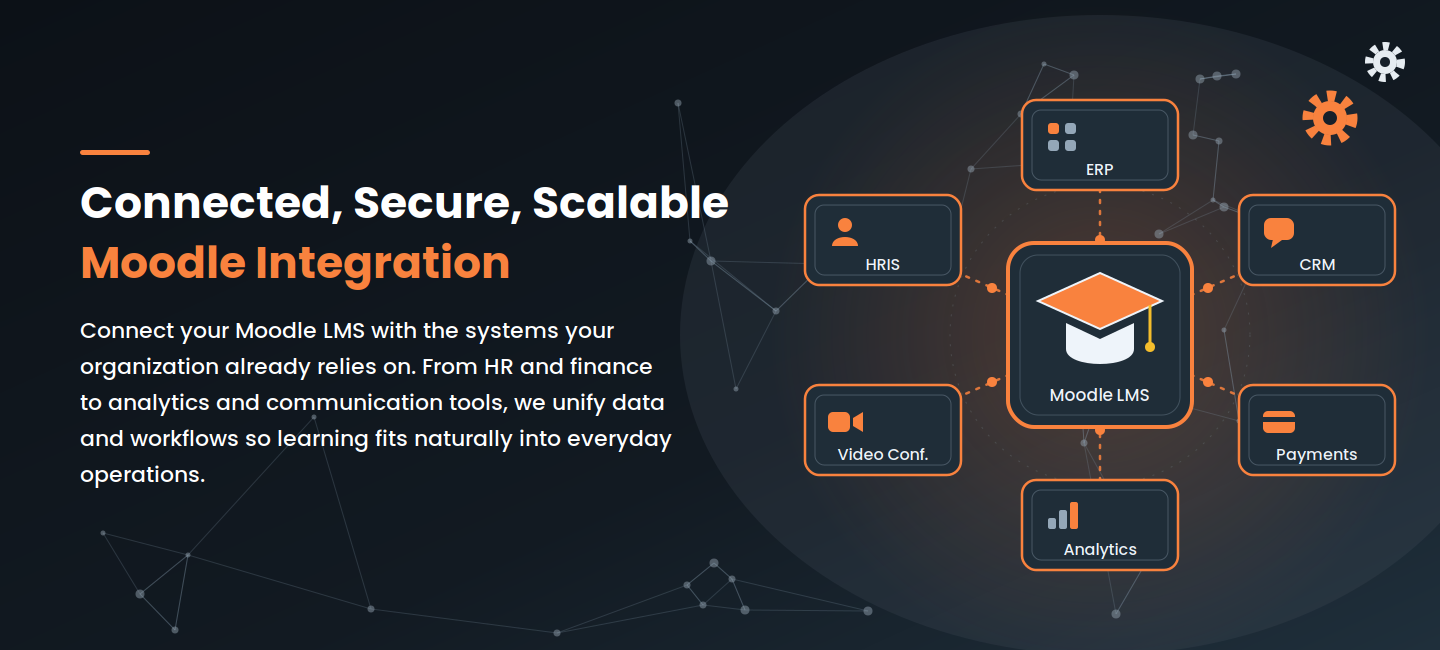
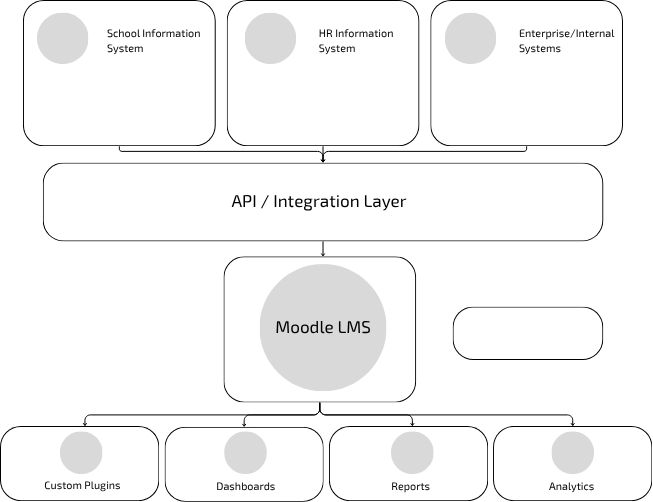
Organizations often operate multiple platforms for student information, employee records, authentication, reporting, finance, learning, and other business processes.
Without integration, users may need to maintain information separately across different systems—creating duplicate work, inconsistent records, and inefficient processes.
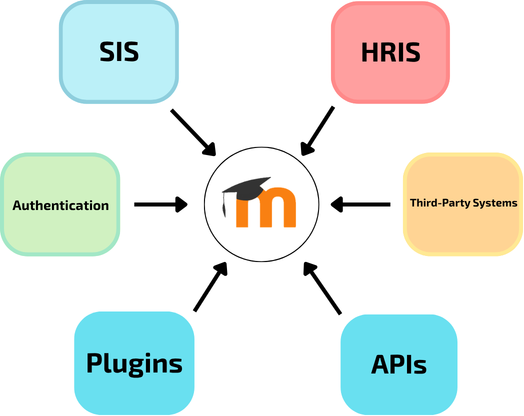
Nephila Web helps connect Moodle with your organization’s technology ecosystem to enable secure data exchange, process automation, centralized access, and better user experiences.
Your content goes here. Edit or remove this text inline or in the module Content settings
School Information System (SIS) Integration
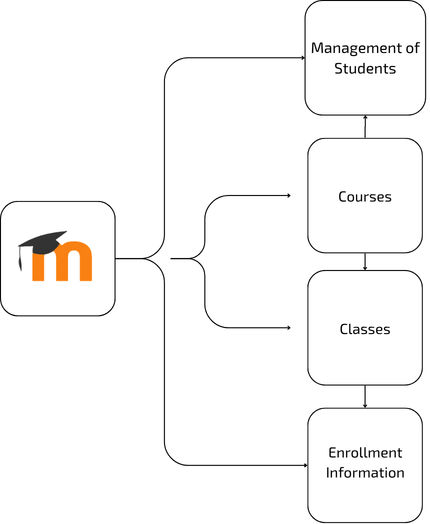
Connect your School Information System with Moodle to streamline the management of students, courses, classes, and enrollment information.
Integration May Include:
Student Records
Course Information
Class Sections
Enrollment
Faculty Assignment
Academic Terms
User Accounts
Grades
Depending on the institution’s requirements and the capabilities of the SIS, information can be synchronized automatically between systems.
Business Value:
Reduce repetitive administrative work, minimize manual data entry, and provide a more consistent flow of academic information.
Human Resource Information System (HRIS) Integration
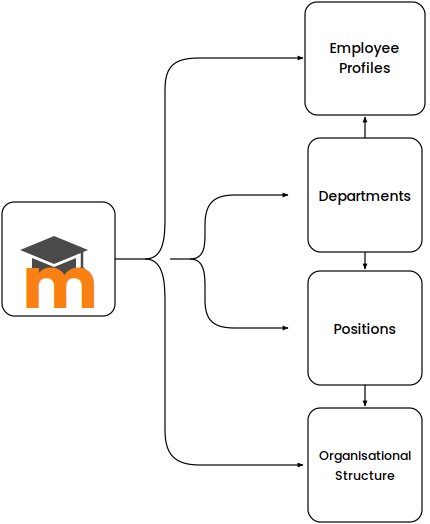
Connect Moodle with your HRIS to support employee learning, professional development, compliance training, and organizational learning.
Integration May Include:
Employee Profiles
Departments
Positions
Organisational Structure
Moodle Accounts
Course Assignments
Training Records
Completion Status


Business Value:
Automate employee learning processes and align training programs with organizational and HR requirements.
Customized Moodle Dashboards
Transform Moodle data into dashboards designed around the information different stakeholders need.
Dashboards can be created for:



Examples of dashboard information include:
Active Users
Course Participation
Completion Rates
Training Compliance
Learner Progress
.
Assessment Results
Department Performance
Enrollment Statistics
Certification Status
Engagement Indictators
.
Business Value:
Turn learning data into meaningful information that supports monitoring, reporting, and decision making
Moodle Plugin Development
When standard Moodle functionality does not fully address your requirements, Nephila Web can develop custom Moodle plugins to extend the platform.
Custom Development may Include:

Development should follow Moodle’s architecture and coding standards to support maintainability and future Moodle upgrades.
Business Value:
Extend Moodle based on actual organisational requirements withoout unnessarily modifying Moodle core
API & Third-Party System Integration
Connect Moodle to external applications through APIs and Moodle Web Services.
Possible Integrations include:


Depending on the systems involved, integrations can support real-time or scheduled exchange of information
Your content goes here. Edit or remove this text inline or in the module Content settings
How Moodle Integration Works

Discover
Design

Develop

Integrate
Discovery & Requirements Analysis
We Identify the systems involved, business processes, users, data requirements, integration points, and expected outcomes.
Solution & Integration Design
Our technical team designs the integration architecture, data flow, APIs, authentication, synchronisation, and security requirements.
Development & Configuration
We develop the required Moodle plugins, APIs, middleware, dashboards, or system connectors.
Integration & Data Mapping
Fields and business rules are mapped between Moodle and the external system.

Test

Deploy

Support
Testing & Validation
The integration undergoes functional, security, data integrity, performance, and user acceptance testing as applicable
Deployment
After validation, the integration is deployed to the production environment using an agreed implementation and change-management process
Monitoring & Support
We provide ongoing technical support, troubleshooting, maintenance, and compatibility assessment as systems evolve.
Your content goes here. Edit or remove this text inline or in the module Content settings
Integration & Architecture
Build a Connected Learning Ecosystem

Your content goes here. Edit or remove this text inline or in the module Content settings
Secure Moodle Integrations
Security Throughout the Integration Lifecycle
Integrations can introduce additional data flows and access points, making security an important part of the solution architecture.
Depending on the integration requirements, controls may include:
Your content goes here. Edit or remove this text inline or in the module Content settings
Data Synchronisation
Keep information consistent across systems
Integration can be designed around clearly defined systems of record, ensuring data flows in the right direction and stay consistent across all systems.
SIS
(Student and Academic Information)
Moodle
(Learning Activities and Assessments)
Dashboard/Reporting
HRIS
(Employee Information)
Moodle
(Training and Learning records)
HRIS / Analytics
(Completion and Compliance)
Depending on the integration requirements, controls may include:
Real-Time
Scheduled
Event-Driven
On-Demand
Your content goes here. Edit or remove this text inline or in the module Content settings
Integration Designed Around Your Workflow
We Don’t Force Your Process Into a Generic Integration
Every organisation has different systems, data, structures, policies, workflows, and business rules
Our Intergration process begins by understanding:
1
What systems need to communicate?
2
What information needs to move between them?
3
Which system is the authoritative source?
4
When should information be synchronised?
5
What should have access to the information?
6
What should happen when data changes?
7
What happens when an integration fails?
This discovery-driven approach allows the integration to address the organisation’s actual operational requirements.
Your content goes here. Edit or remove this text inline or in the module Content settings
Integration Use Cases
Every organisation has different systems, data, structures, policies, workflows, and business rules
Education - SIS ⟶ Moodle

Student enrolled in the SIS
Moodle account created
Student enrolled in the correct courses
Teacher assignment synchronised
Learning begins
Corporate Learning - HRIS ⟶ Moodle
Student enrolled in the SIS
Student enrolled in the SIS
Management monitors learning KPIs and compliance
Student enrolled in the SIS
Student enrolled in the SIS
Managed Reporting - Customized Dashboard ⟶ Moodle
Moodle Learning data
Aggregated and processed
Dashboard generated
Management monitors learning KPIs and compliance
Your content goes here. Edit or remove this text inline or in the module Content settings
Why Integrate Moodle?
Automative Processes
Reduce repetitive adminstrative tasks
Improve Data Consistency
Reduce duplicate records and manual encoding
Improve User Experience
Give learners and staff a more seamless digital experience
Gain Better Insights
Transform Moodle and organisationsal data into actional reports
Improve Data Consistency
Reduce duplicate records and manual encoding
Why Nephila Web?
We understand both sides of an integration – the Moodle application and the infrastructure and systems that connect to it


Frequently Asked Questions
Can you integrate Moodle with our existing SIS?
Can Moodle integrate with our HRIS?
Can you integrate Moodle with a system developed internally by our organization?
Does the external system need to have an API?
Can you create a customized Moodle dashboard?
Can you develop custom Moodle plugins?
Can Moodle support Single Sign-On?
Can data synchronize automatically between systems?
Can Moodle send data back to our SIS or HRIS?
How do you secure integrations and APIs?
Will a custom plugin continue working after a Moodle upgrade?
Can you maintain an integration after deployment?
Connect Moodle To Your Moodle Ecosystem
Whether you need to connect Moodle with a School Information System, HRIS, identity platform, internal application, reporting dashboard, or third-party service, our Moodle specialists can help design and develop an integration based on your organization’s requirements.
Tell Us What You Want to Connect
Discuss Your Moodle Integration